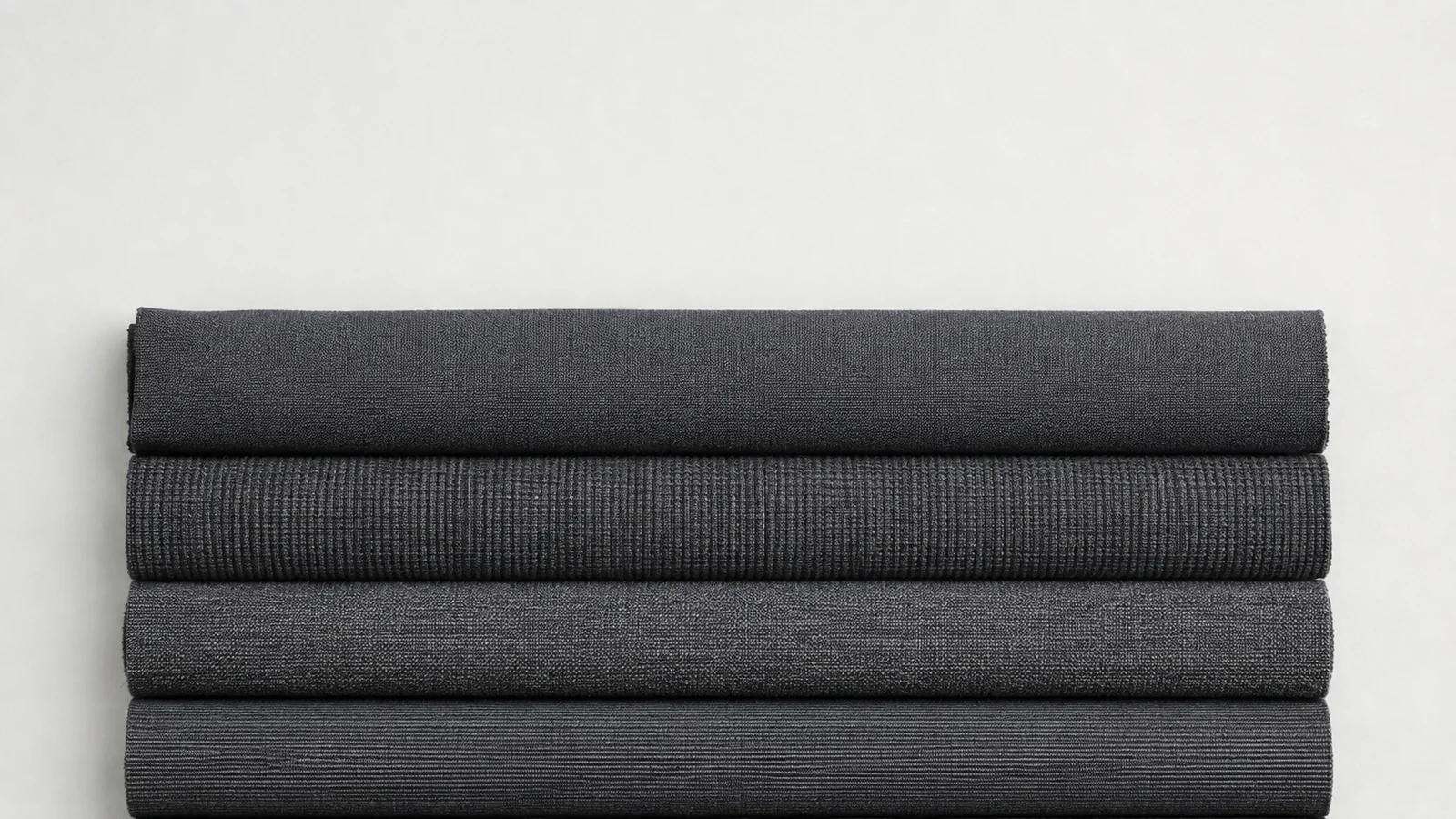
Twill
Diagonal ribs, a dense set. Holds its shape longer, and shows the bulge later — but shows it more sharply once it arrives.
Springback — stretch fatigue, shown
Every stretch garment loosens over a day. Almost none of them tell you by how much, or which part of it a wash will not give back. Drag the hour below and watch the knee, the seat and the waist go.
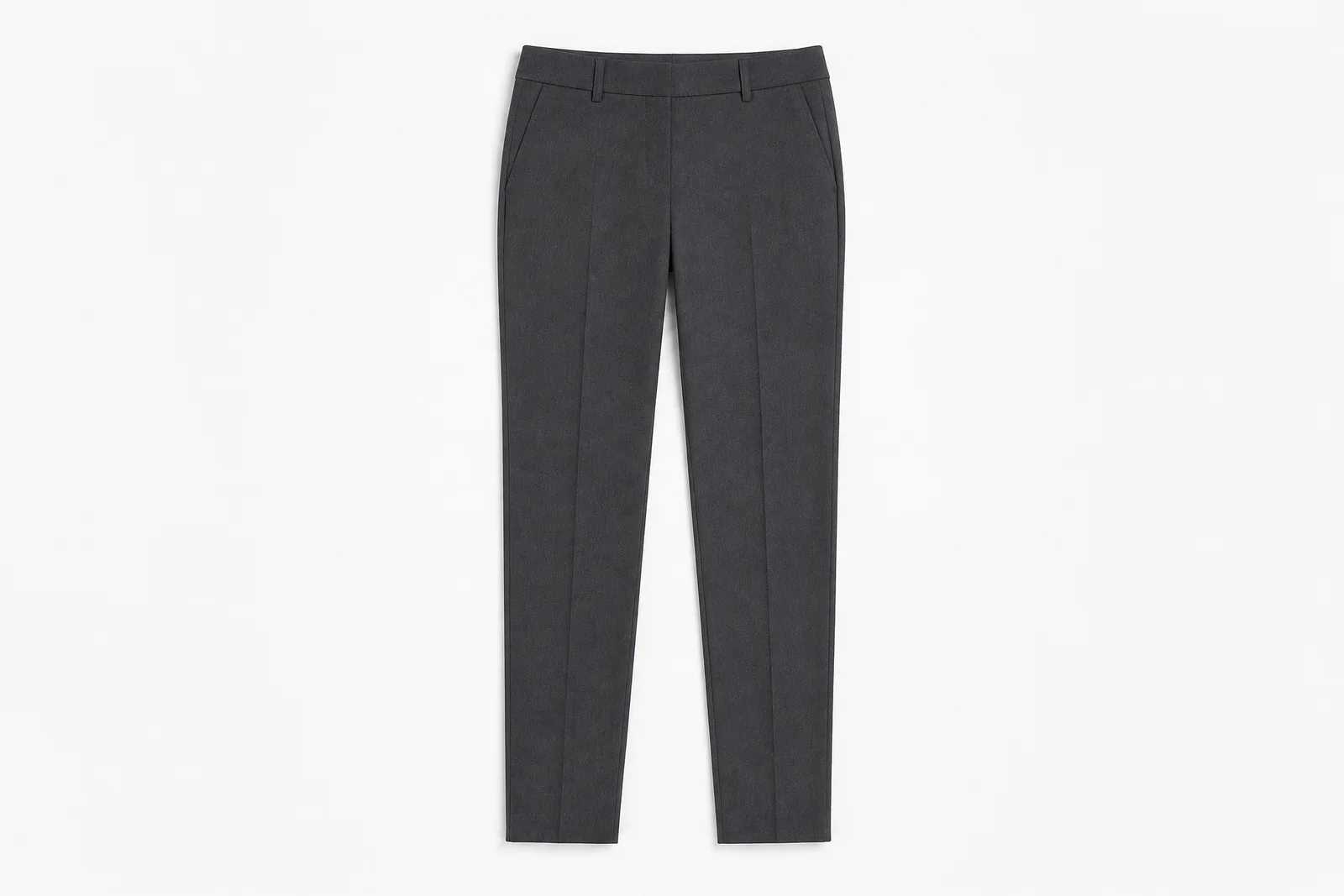
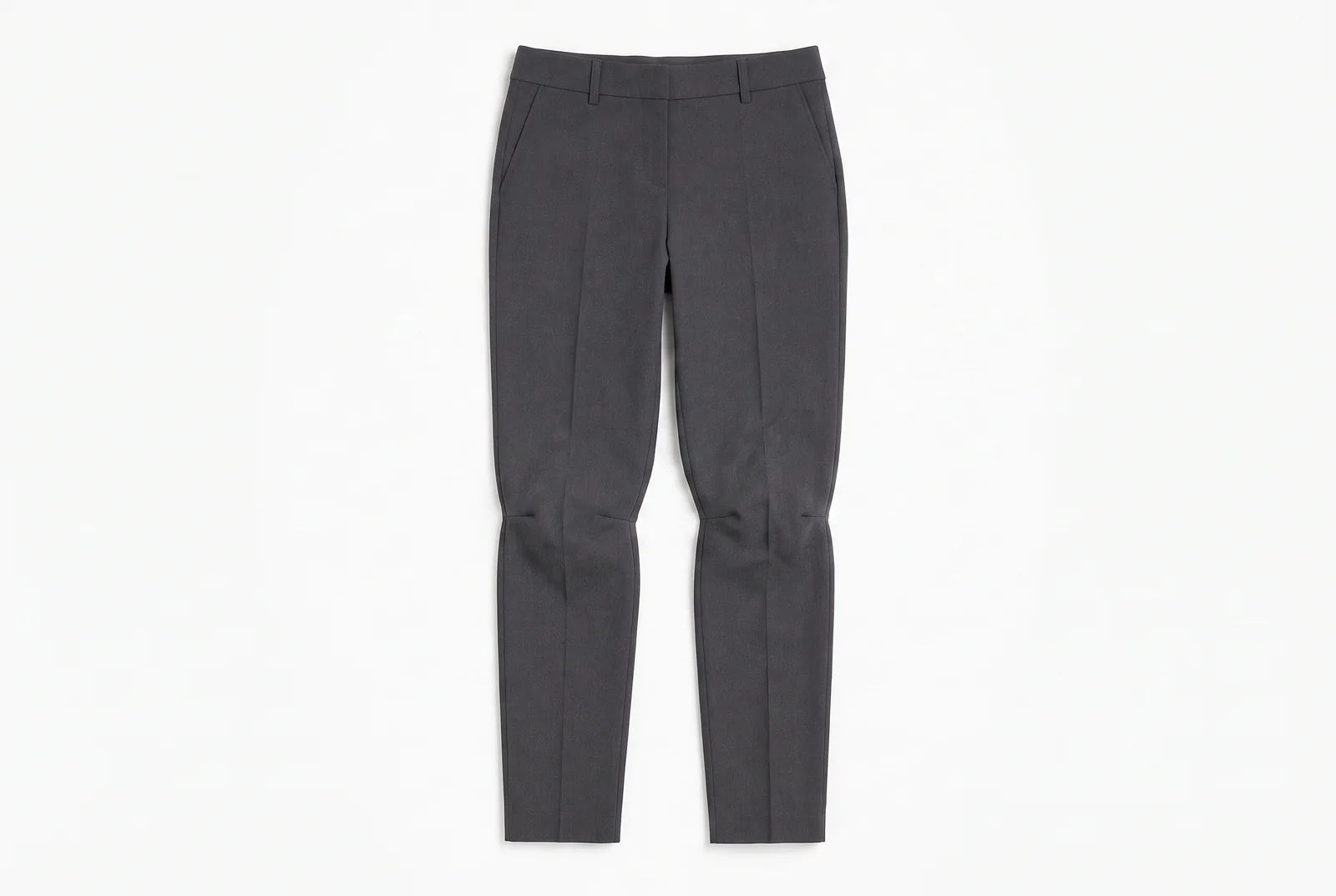
24–37%
added ease, estimated
Flexed most often. Bulges first, recovers best.
17–27%
added ease, estimated
Loaded continuously while seated. Recovers partly.
12–20%
added ease, estimated
Held under constant tension. Recovers least.
Second question
Partly. Set a wash count and the recovery is redrawn. What sits under the oxide rule is the part that stays.
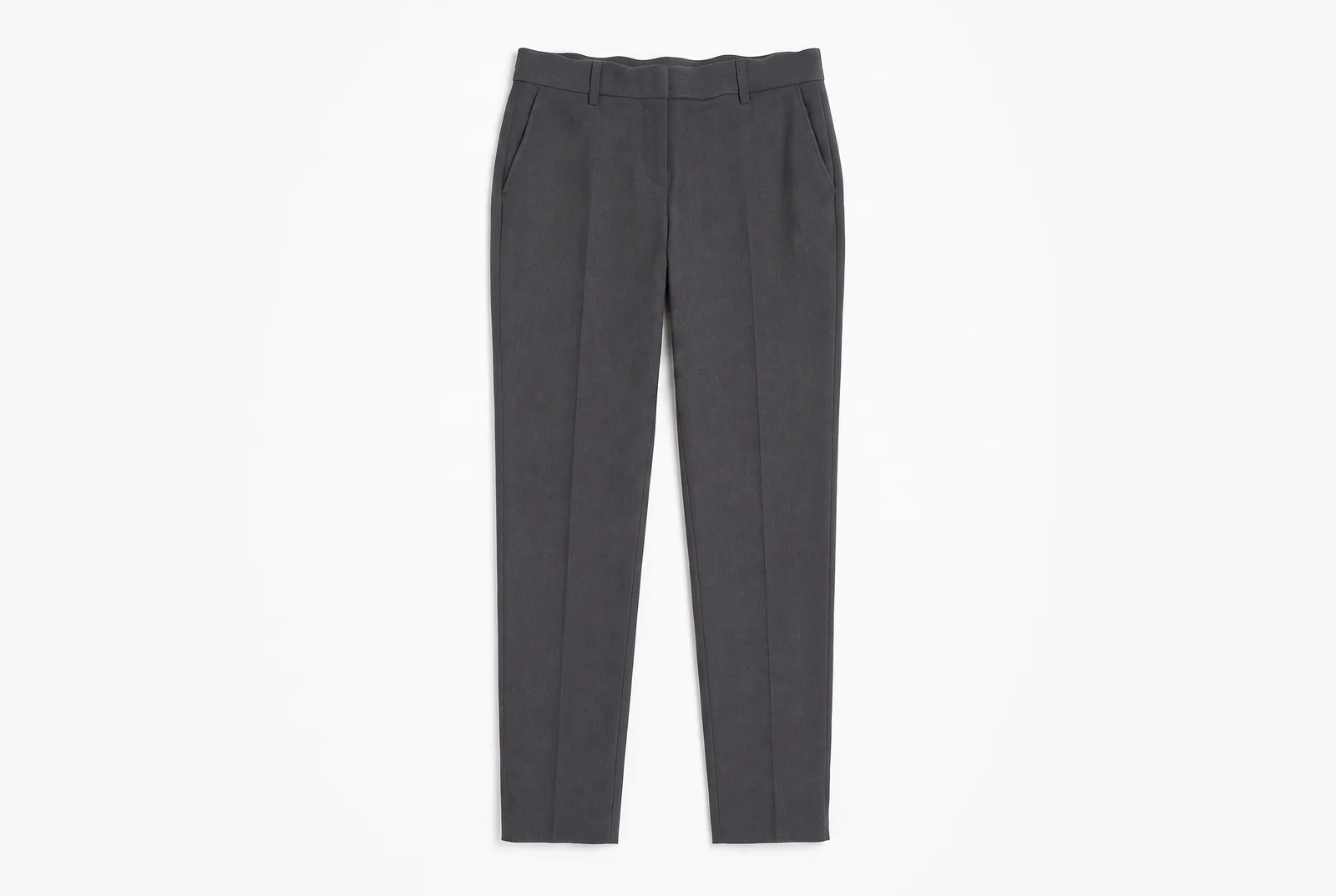 Estimated behaviour
Which elastomeric fibre was used. Labels give a percentage, not a type, and types differ in how much they give back.
How the fabric was constructed and finished. Setting, heat treatment and finishing decide recovery more than the percentage does.
How much you move. A day spent seated and a day spent walking load a garment in completely different places.
The garment's history before you photographed it. Previous wears and washes are already in the fabric.
How it runs
Three steps, in this order. The stage plates have to be settled before the clip is generated — the clip is drawn from them, so there is no path that skips ahead.
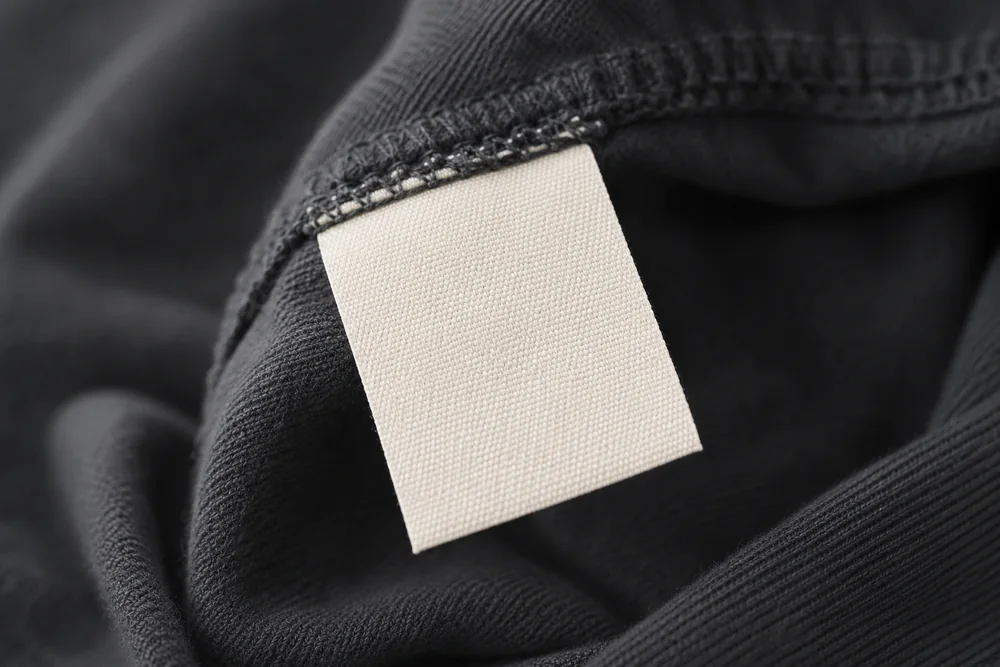 01
01The composition tag, or the garment laid flat. The reading picks up the fibre split and the construction — twill or knit, give in one direction or two. Photographs of a garment being worn are declined.
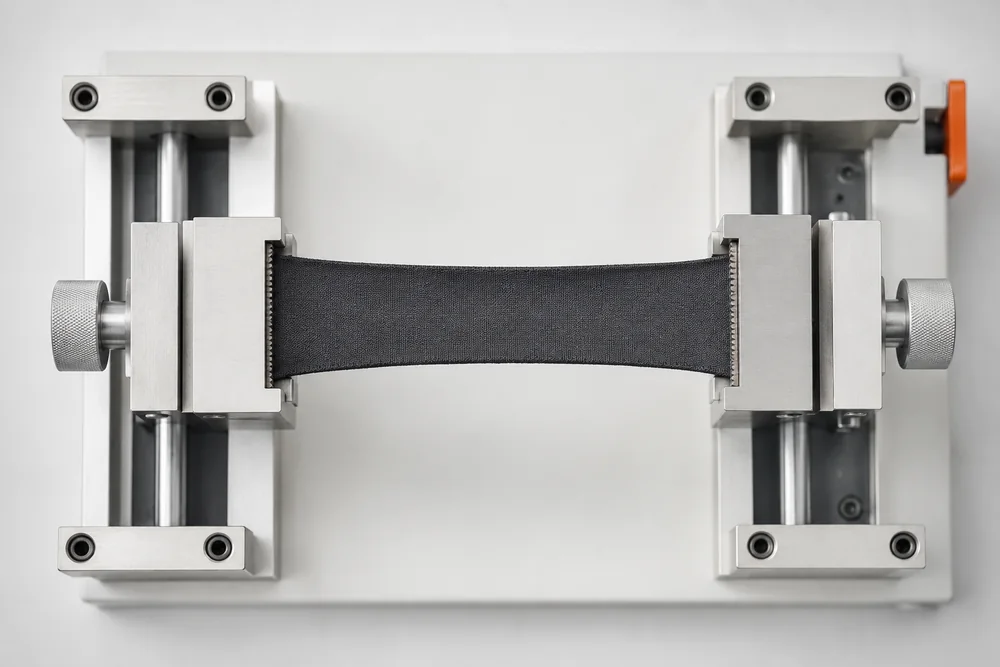 02
02One sentence is enough. Ten hours at a desk loads a garment nowhere near where eight hours on your feet does, and the stage plates are drawn for the hours you actually gave.
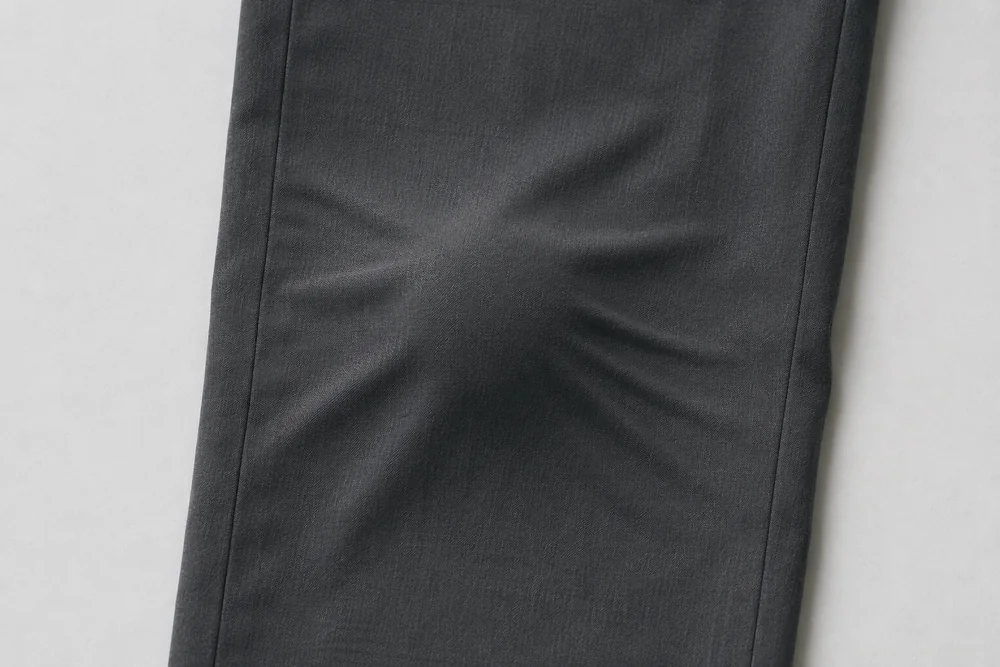 03
03Stage plates first: knee, seat and waist against their morning outlines, as ranges. Then, once the plates are settled, the progression clip fills in the hours between them.
The part not on the label
A percentage says how much elastomeric fibre is in the cloth. It does not say which kind, how it was spun, which directions it runs in, or how the fabric was set afterwards — and those decide the recovery. Two garments with the same figure on the tag can behave nothing alike.
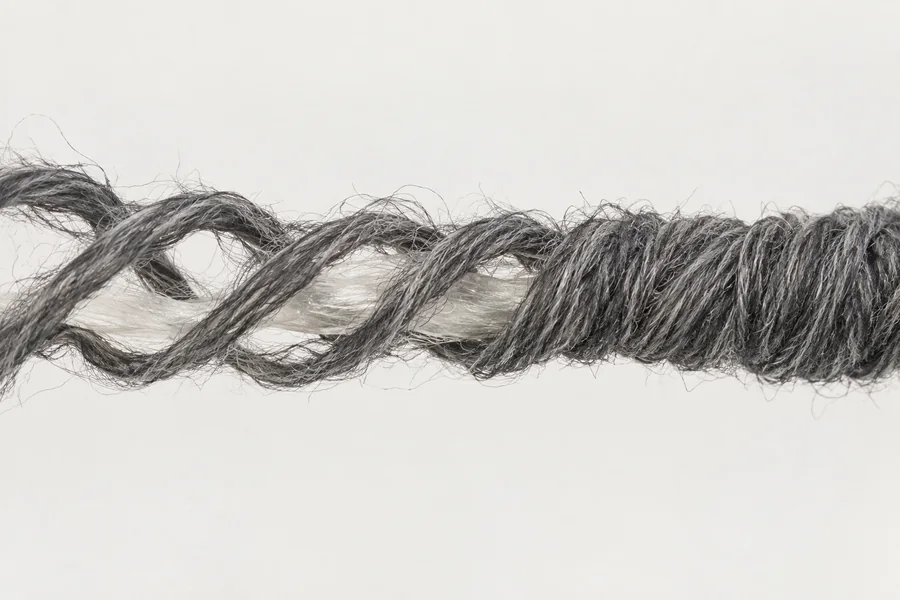
Diagonal ribs, a dense set. Holds its shape longer, and shows the bulge later — but shows it more sharply once it arrives.
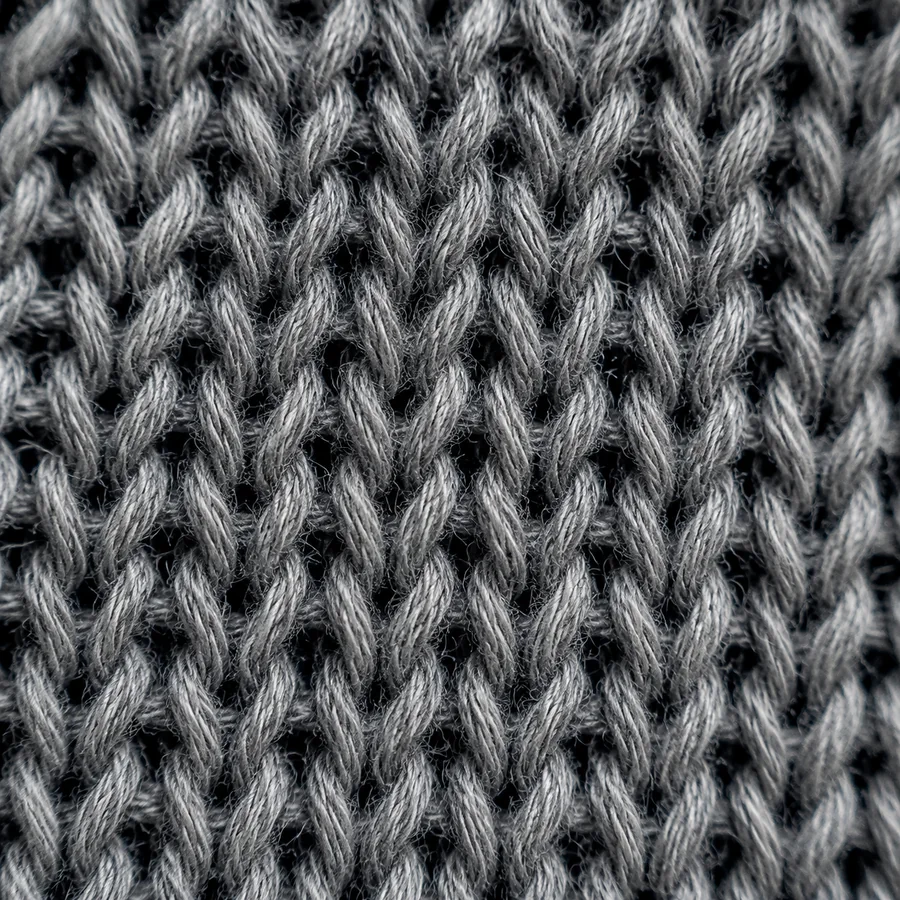
Loops, not a grid. Comfortable immediately, slack sooner. Most of what feels soft in a fitting room is this.
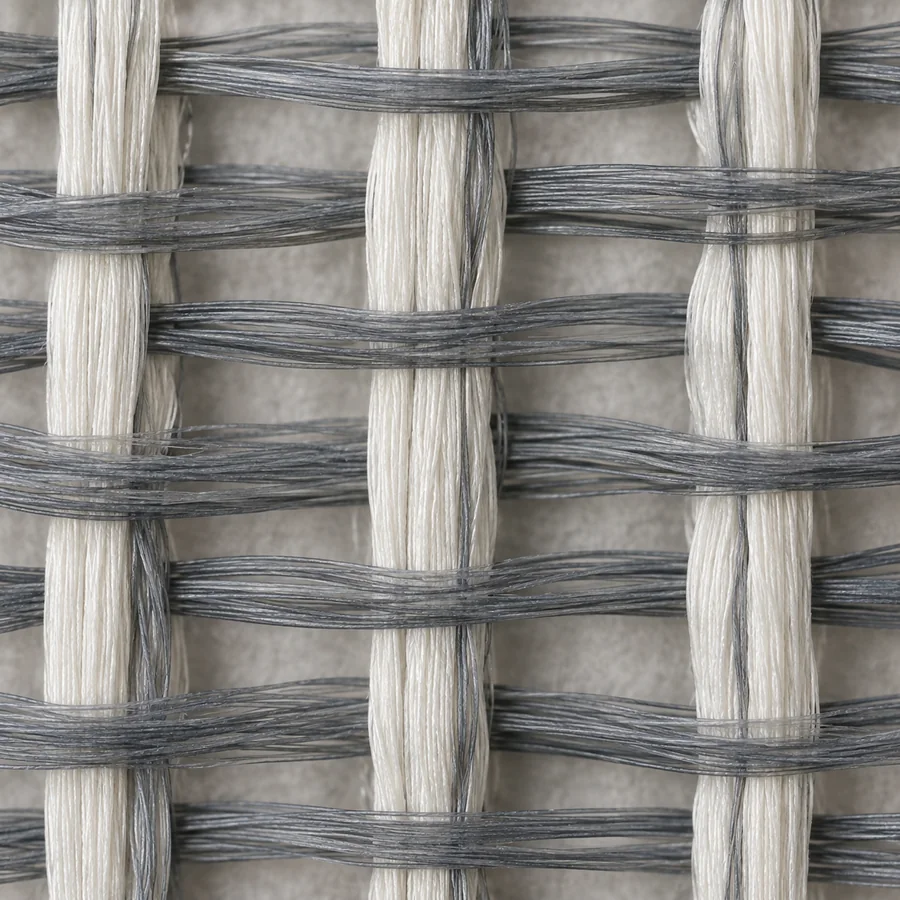
Elastic across the width alone. The knee has nowhere to go along the leg, so the ease collects in one place.
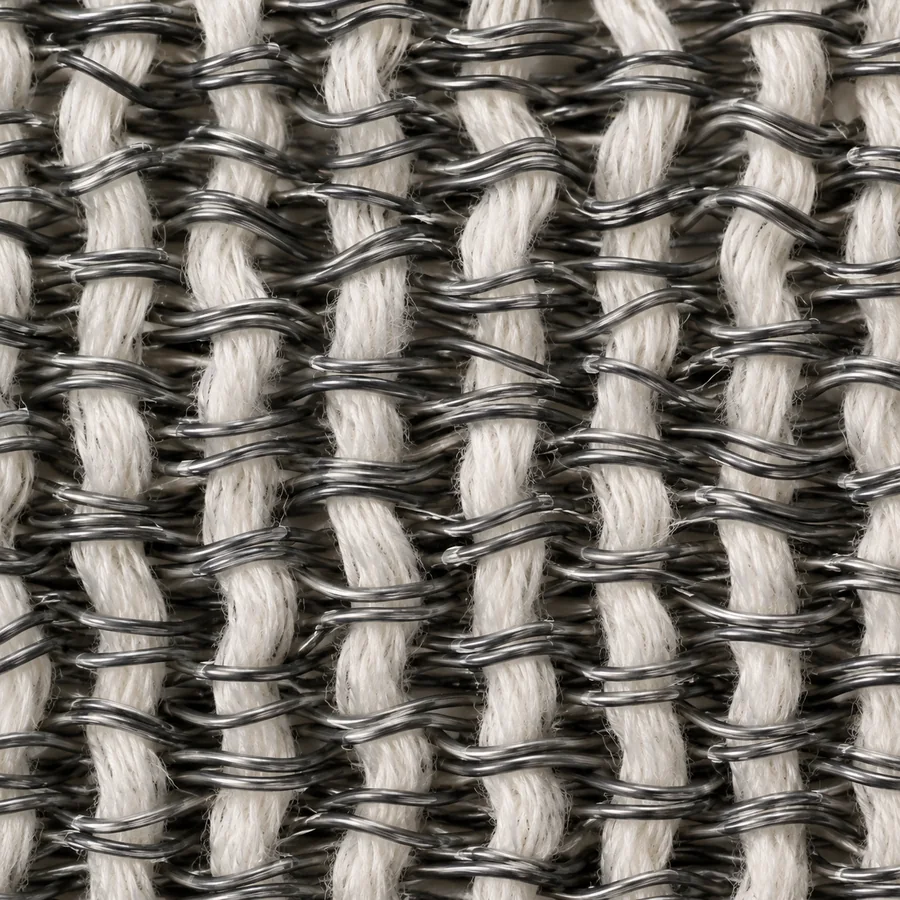
Elastic in both directions. The load spreads, and so does the recovery. Costlier, and rarely stated on a label.
Why a clip and not two pictures
A morning frame and an evening frame tell you it happened. What you are actually deciding is whether it happens before you need the garment to still look right — and that is the middle, which only a continuous change can show. Hour marks and zone names are drawn by the page over the clip, never by the model. No audio track.
Plans
Credits measure usage of the service and nothing else. They are not money, not stored value, not redeemable and not transferable. What is unused at the end of a period does not roll into the next one.
$0USD / month
No card · inkl. MwSt.
Enough to read one garment and see how far it goes.
$13USD / month
or $125 USD / year · inkl. MwSt.
For deciding whether one garment is worth the money.
$38USD / month
or $365 USD / year · inkl. MwSt.
For following a wardrobe through its wash cycles.
All prices in US dollars (USD), inkl. MwSt. Full plan comparison, credit costs and where the wall sits
Questions
If something here is not answered, write to us. A person replies.
SupportWe do not, and the site never claims to. What you get is a general estimate built from the composition you photographed and the construction visible in the picture. It is not a test of your garment. The exact elastomeric fibre type and the finishing process decide most of the recovery behaviour, and neither is printed on a label — so neither is available to us, or to you. That is why every figure here is given as a range and marked as estimated behaviour, and why the list of what we cannot know appears next to every result.
Fifty credits a month, no card. Enough to read a composition and see the stage plates, including the part about what does not come back.